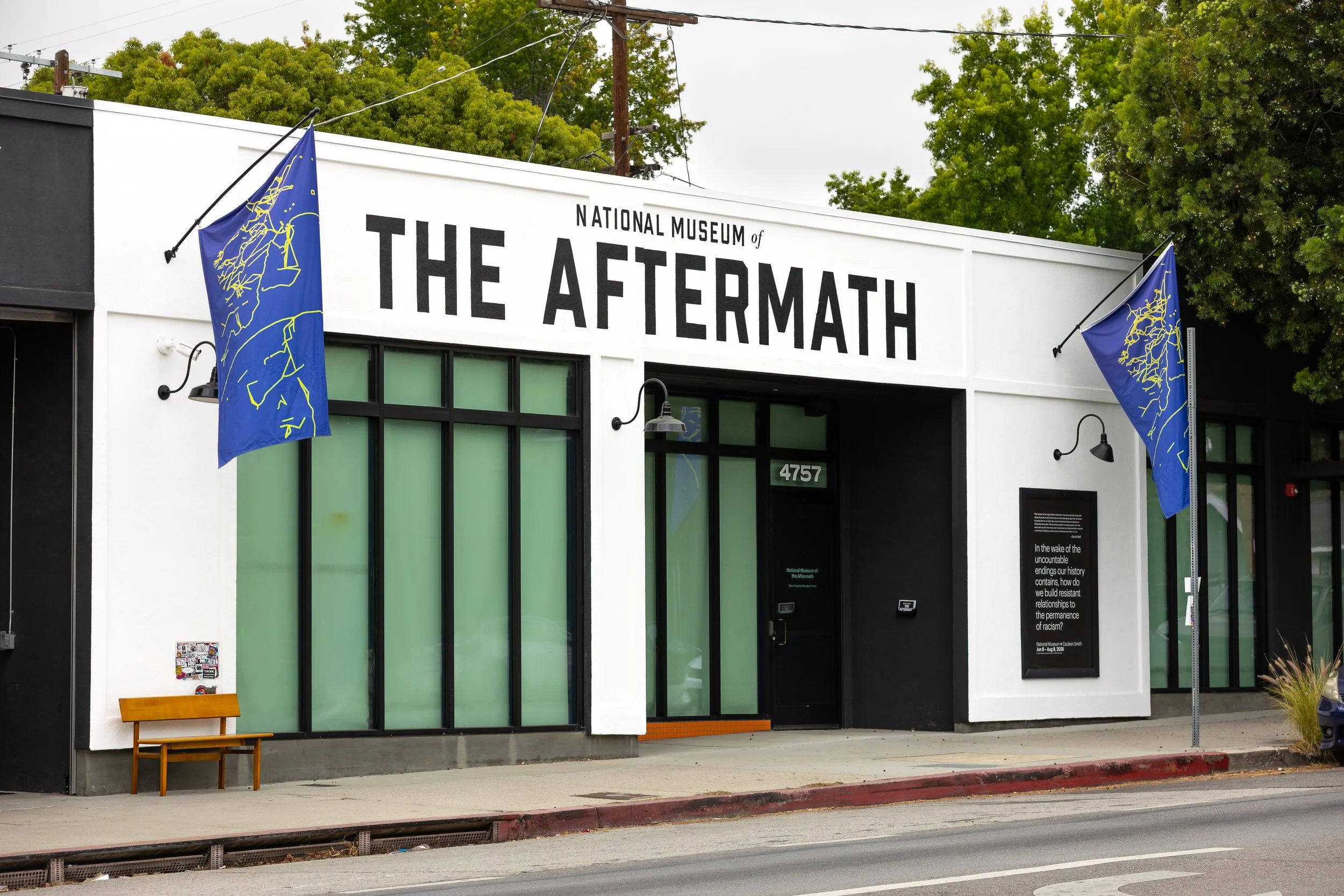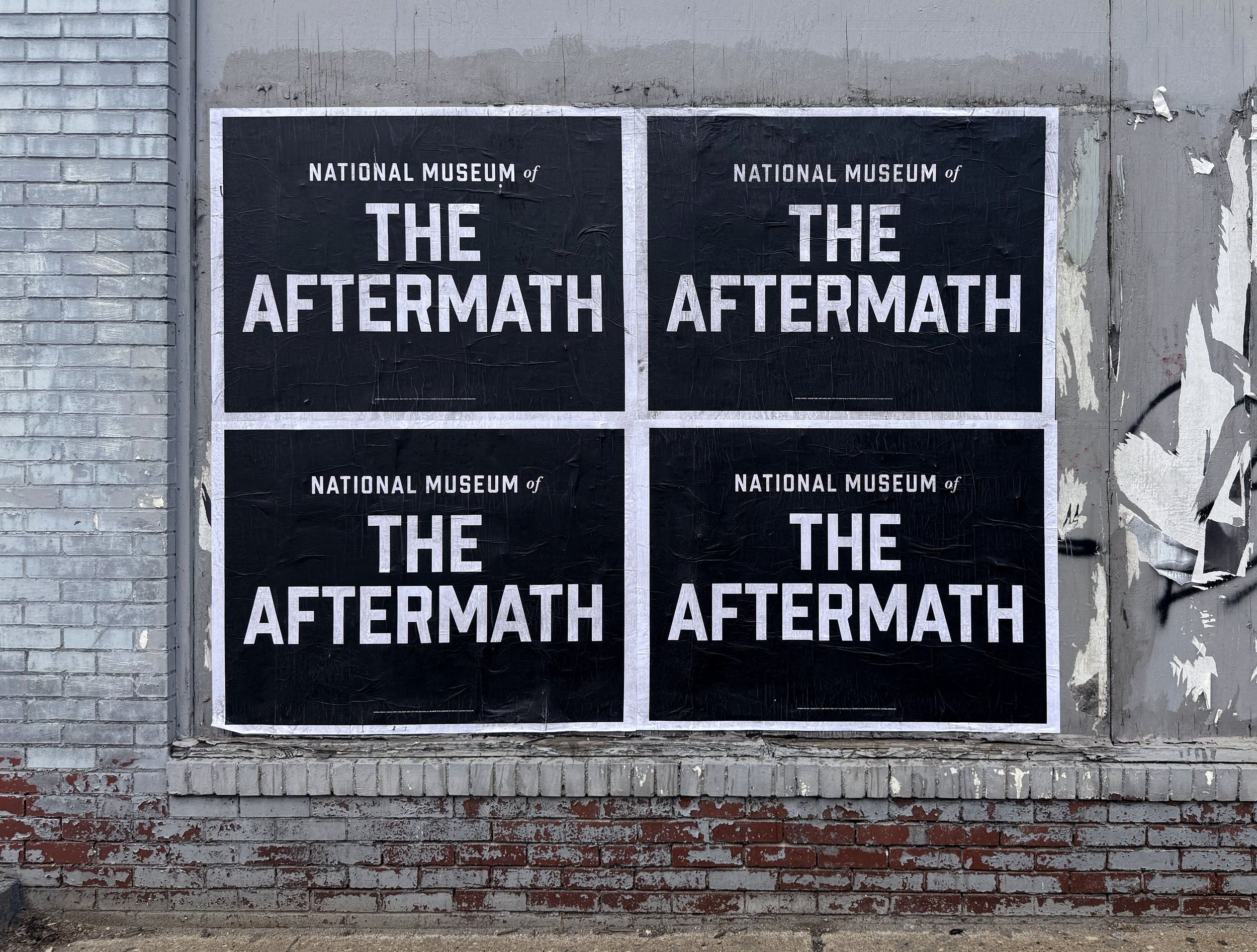
National Museum of the Aftermath
Los Angeles, CA (in collaboration within OXY Arts) Summer 2026
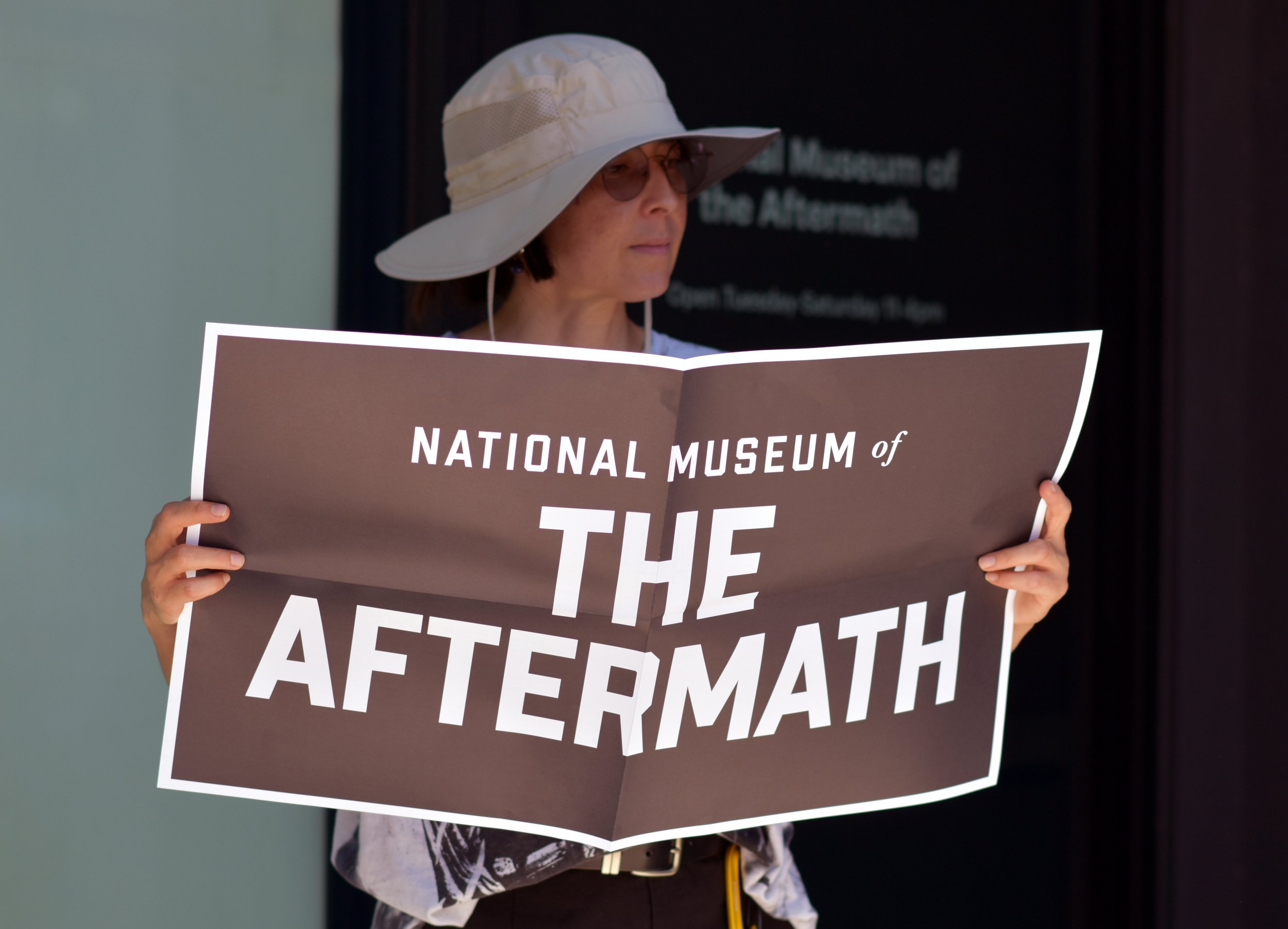
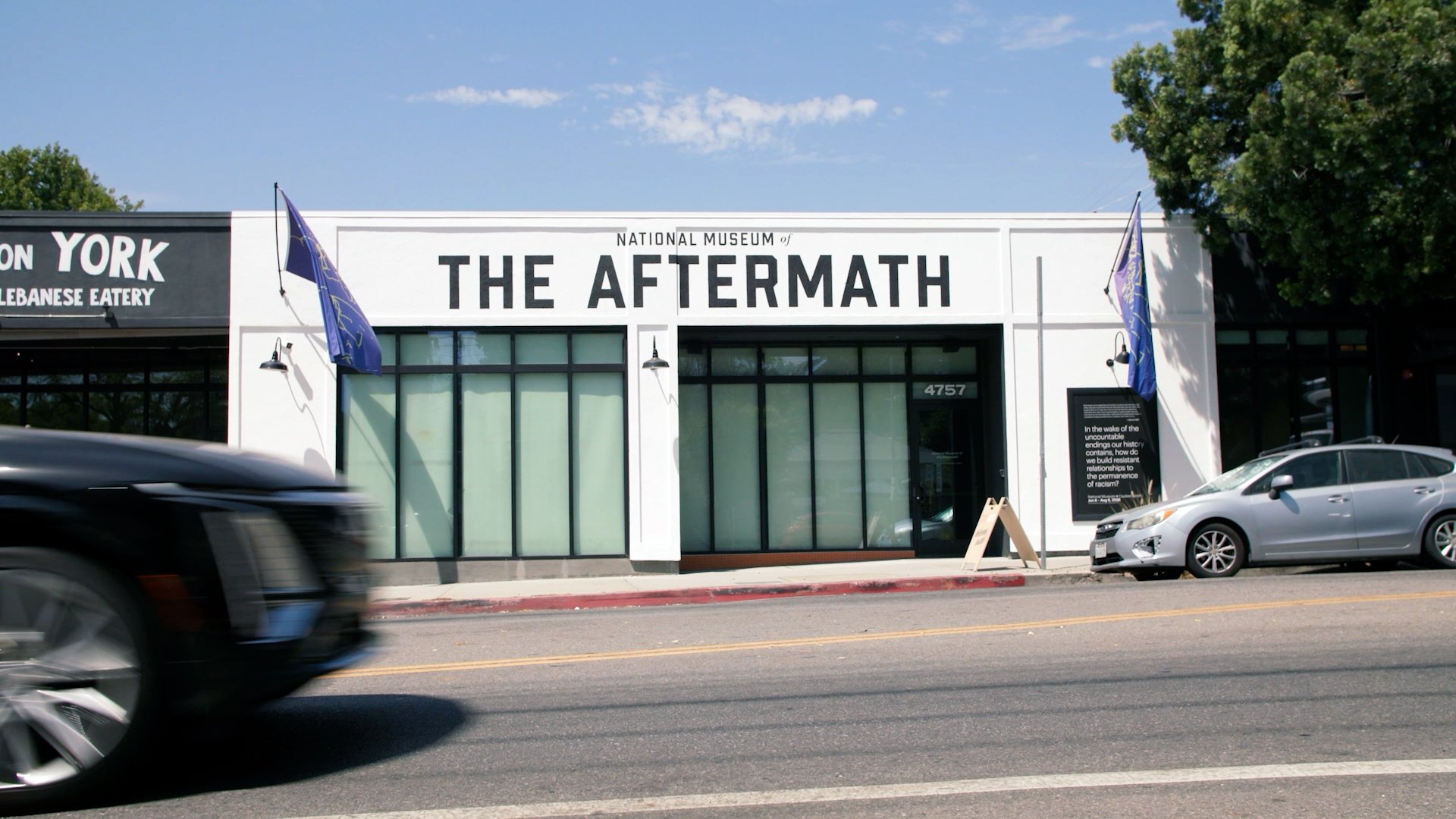
Throughout summer 2026, the National Museum of the Aftermath is operating within OXY ARTS. This speculative museum, conceived and titled by Cauleen Smith and curated by Jon Rubin and Harrison Kinnane Smith, is the most recent iteration of Rubin's National Museum. The ongoing project moves between cities, changing its name and form with each iteration, critically asking which histories and futures are deemed worth telling and which are ignored or forgotten.
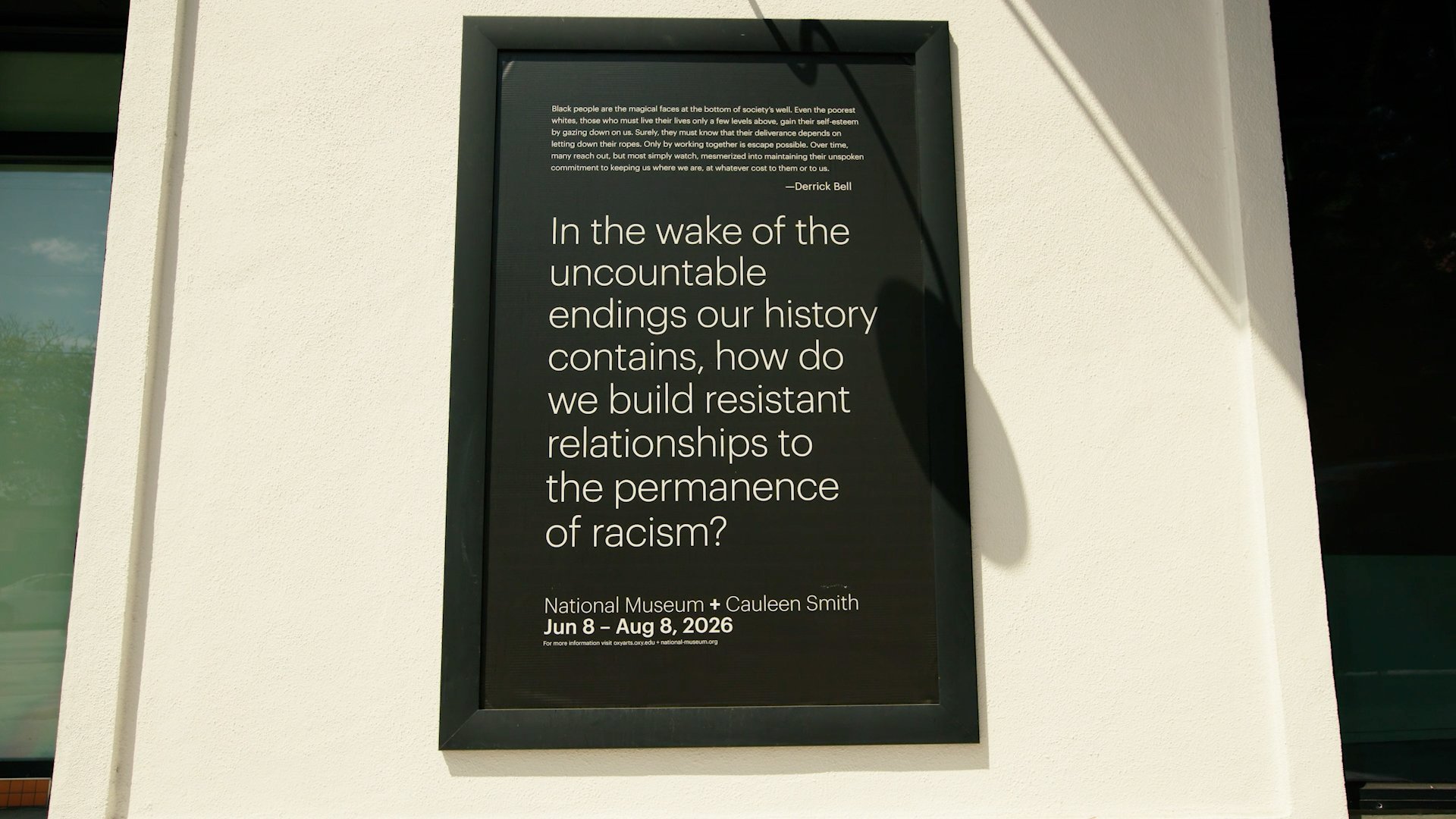
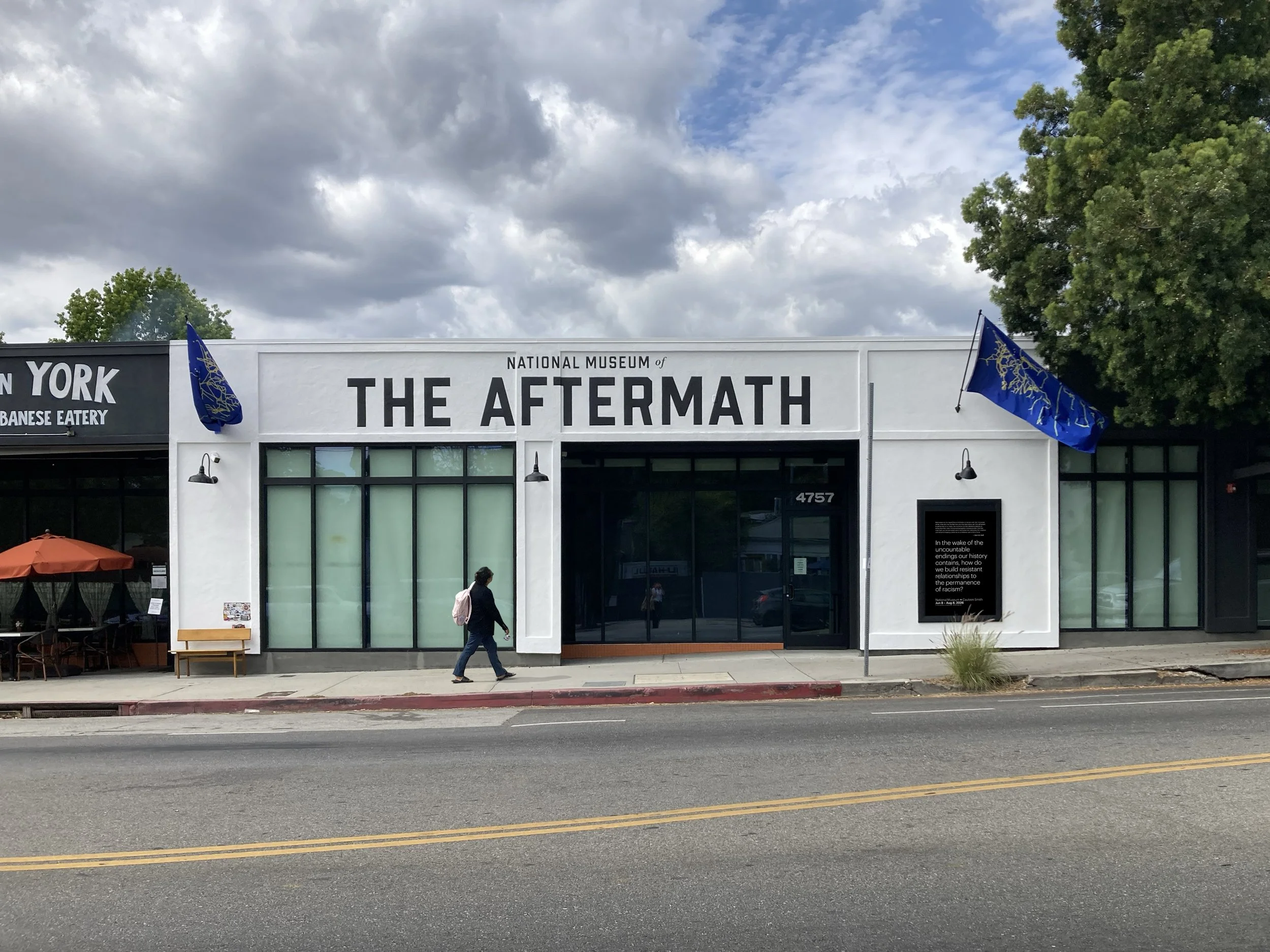
The National Museum of the Aftermath positions the present as post-historical, asking: "In the wake of the uncountable endings our history contains, how do we build resistant relationships to the permanence of racism?"
This summer, the Museum will periodically operate as a sound stage for the artist Cauleen Smith, who will film three scenes hovering between the real and speculative. Each stages the internal negotiations of collective struggle — the gatherings, disagreements, and nuances of people trying to build something together within and alongside what remains. The material traces and video documentation of these private performances will be on view for the public during the gallery's regular open hours and provide the context for a series of public gatherings. These will include a film series, reading group, and an open call to individuals and organizations motivated to confront the proposition that we are already living in an aftermath.
By opening the gallery to a multiplicity of uses, the Museum seeks to challenge the conventions of its form — rather than a space to be filled with artifacts and objects, it has become a place for research, performance, and shared thought. This is also an act of para-institutional nesting: OXY ARTS operating semi-independently within Occidental College; The National Museum hovering between speculative institution and artist project; and inside all of that, Cauleen Smith's National Museum of the Aftermath — an artist project within a fictional museum within an arts space within a college.
Lead Artist: Cauleen Smith
Host Organization: OXY ARTS
Writer: Regina Freer
Curators: Harrison Kinnane Smith and Jon Rubin
National Museum Founder and Organizer: Jon Rubin
Designer and Sign Painter: Nick Caruso
-
Can a museum exist without a permanent address, accumulating its identity gradually, moving between cities, changing its name? While it announces itself as a museum, the National Museum is closer to a series of propositions about what a museum could be. To date, it has appeared on the facade of an empty building in Pittsburgh, renaming itself four times (The National Museum of…) over the course of 2024, and earlier this year it took up residence in Puerto Rico with a hand-painted sign occluding the storefront window of Beta-Local, an artist-run space in San Juan. There the project has expanded into a multi-month collaboration with the artist-organizers and the ethno-paleobotanist Jaime Pagán Jiménez. In PR it’s been operating as an open laboratory, plant nursery, radio station, and research kitchen, revolving around the Marunguey, an endemic zamia plant, and one of the oldest in the Caribbean. This summer the National Museum arrived in Los Angeles, at OXY ARTS in Highland Park, and found a new name through a collaboration with artist Cauleen Smith.
The core proposition of the National Museum, founded by Pittsburgh-based artist Jon Rubin, involves taking over the facade of a building, in this way it makes itself known. Yet it operates in most other ways closer to an artist project, or a para-institution. The prefix para, from the Greek, meaning ‘alongside’ or ‘beyond’ suggests a closeness, contingent but also autonomous—like a paramedic or paralegal. The National Museum lives in a state of concurrence: making claims about the nation, but provisionally and in parallel to existing institutions.
At OXY in Los Angeles, the National Museum of the Aftermath imagines the present as inextricably bound to the historical. It asks: what strategies of survival can we develop in the wake of the uncountable endings that history contains? Near the entrance to the OXY ARTS gallery is a quote from legal scholar Derrick Bell, who argues that racism and the social relations it produces are a permanent and even foundational feature of American life. In this context the aftermath is not a period that comes after, it’s the condition communities have survived, through waves of loss and oppression, while imagining futures within what remains.
Also in parallel is Beta-Local’s El Museo Nacional de lo que queda (National Museum of What Remains), which suggests a different but related form of persistence. Puerto Rico has long hovered in constitutional limbo; it’s been “foreign in a domestic sense,” for over a century—neither an official state nor a sovereign nation. Its residents are US citizens who cannot vote for the President, and since 2016 an unelected fiscal board appointed in Washington has held power over the budget of the government they do elect. To learn from Bell is to recognize this limbo as more than an unresolved question: it is structural, permanent. The dispossession this produces is material but also temporal. A 2022 restructuring pledging public revenues to bondholders until the 2040s has set debt against the island’s future, while historic impositions of the English language and a gag law (Ley de la Mordaza) have interrupted generational transmission. What remains, according to Beta-Local, is the sensation of living in a constant present, one that denies the possibility of a deeper reckoning with what came before.
While the National Museum overwrites the facade of OXY ARTS in Los Angeles, ambiguously suggestive of the start of a new institution or a change of ownership, the gallery periodically operates as a sound stage and open-ended residency for LA based Smith, who has been filming scenes on the line between the real and the speculative. Each stages the gatherings, disagreements, and nuances of people trying to build something together within what remains, alongside the aftermath. The residency at OXY follows other recent projects by Smith, including The Warden (2025), her contribution to the MONUMENTS exhibition at the Geffen Contemporary, for which she trained a live CCTV feed at the Vindicatrix, a figure that once topped the column of the Jefferson Davis memorial in Richmond, Virginia, permanently detaining a white-supremacist icon. And the project at OXY coincides with her presentation of an impressive multi-channel installation The Wanda Coleman Songbook in the Venice Biennale's Arsenale, as part of In Minor Keys. Although first presented at NYC’s now closed 52 Walker, the four channel video thinks about Los Angeles through the language of the eponymous poet, and was called a “recognition of the alchemical potential of art to transmute historical suffering into joy.”
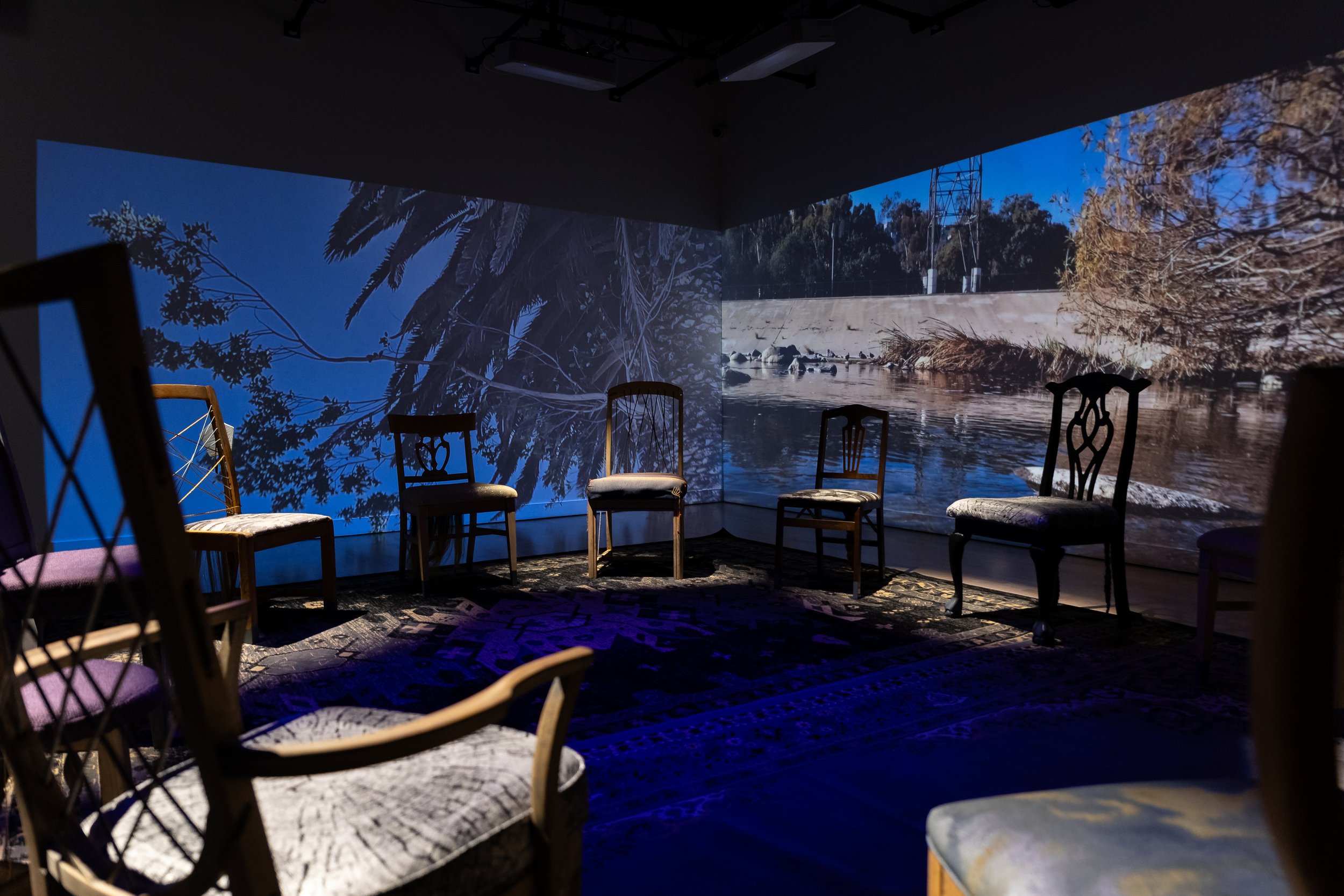
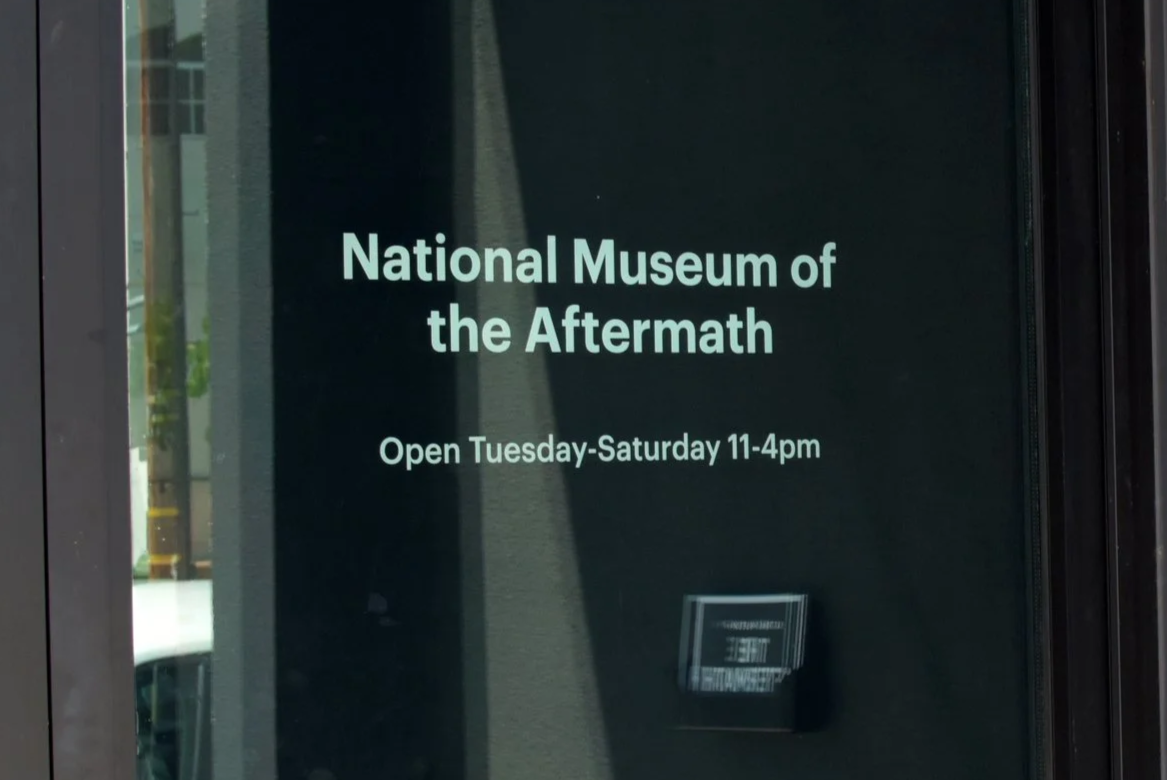
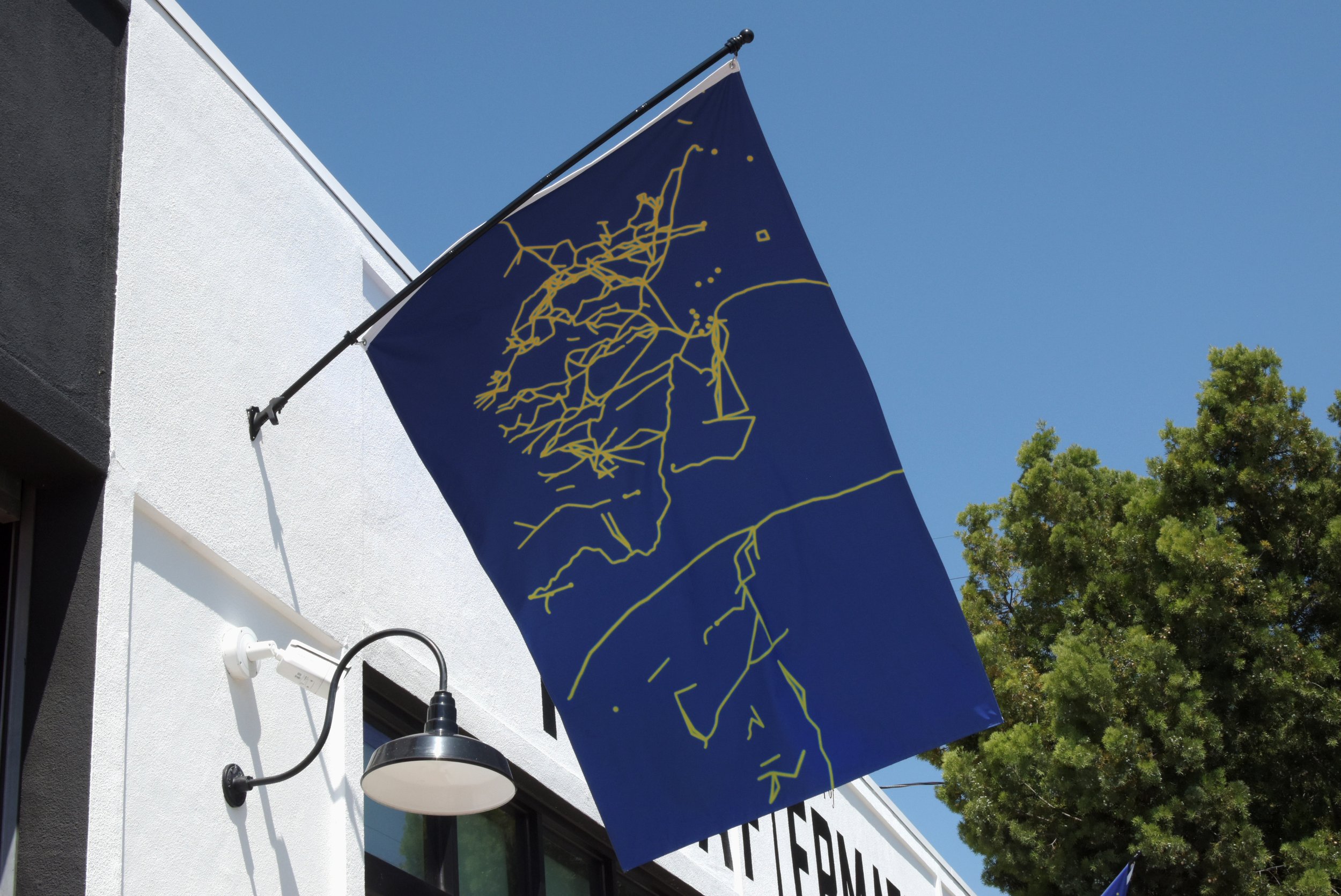
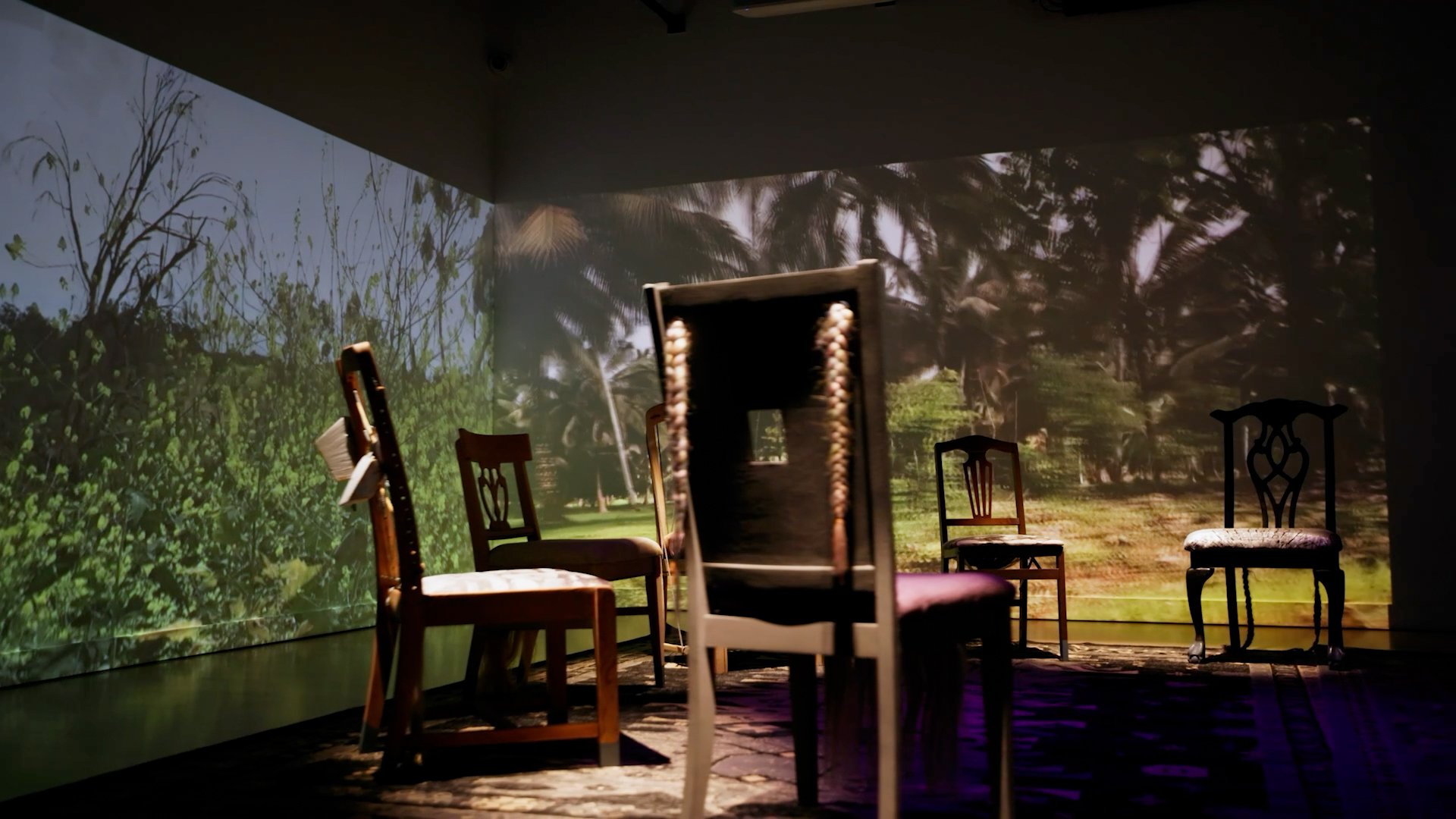
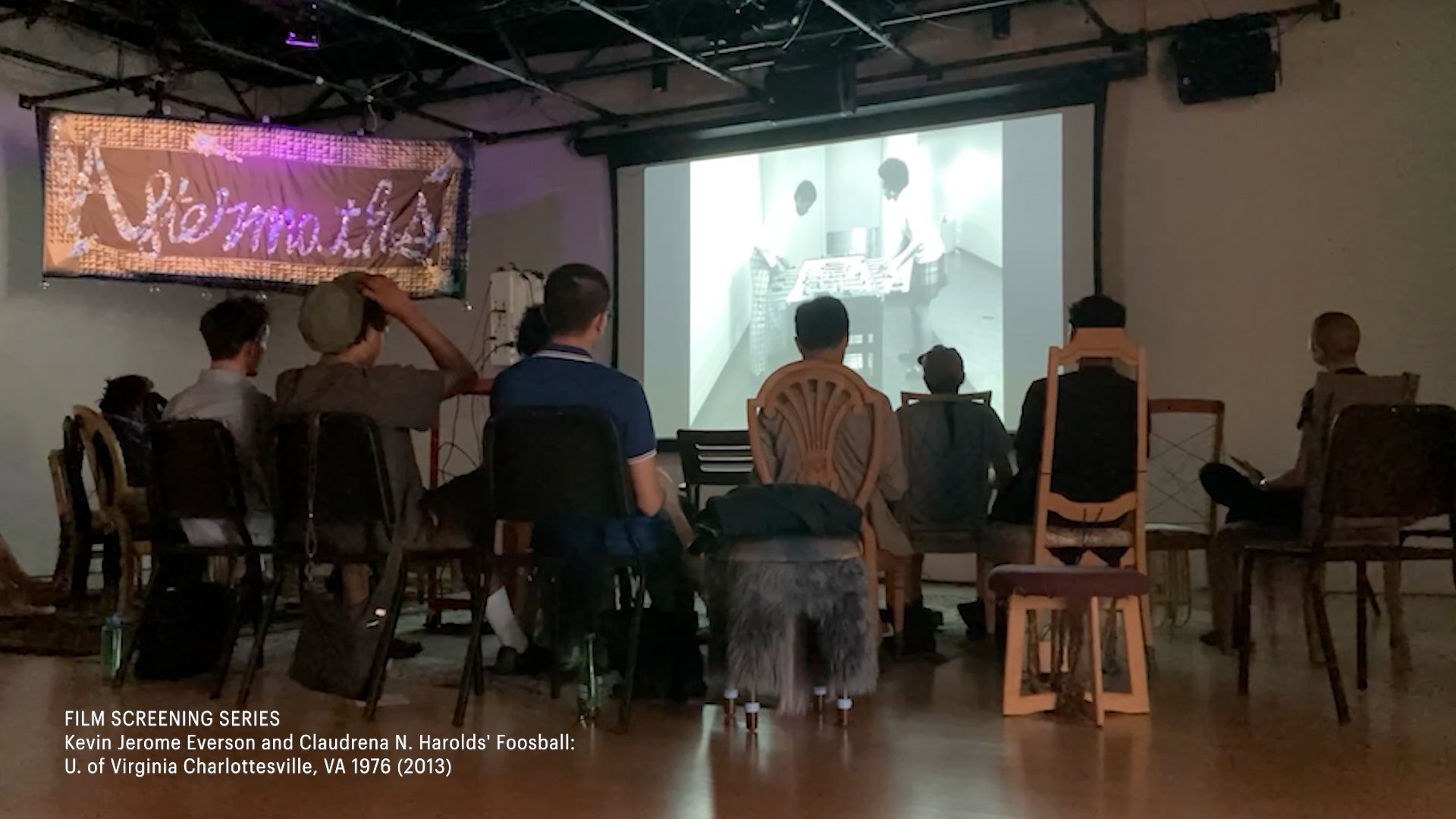
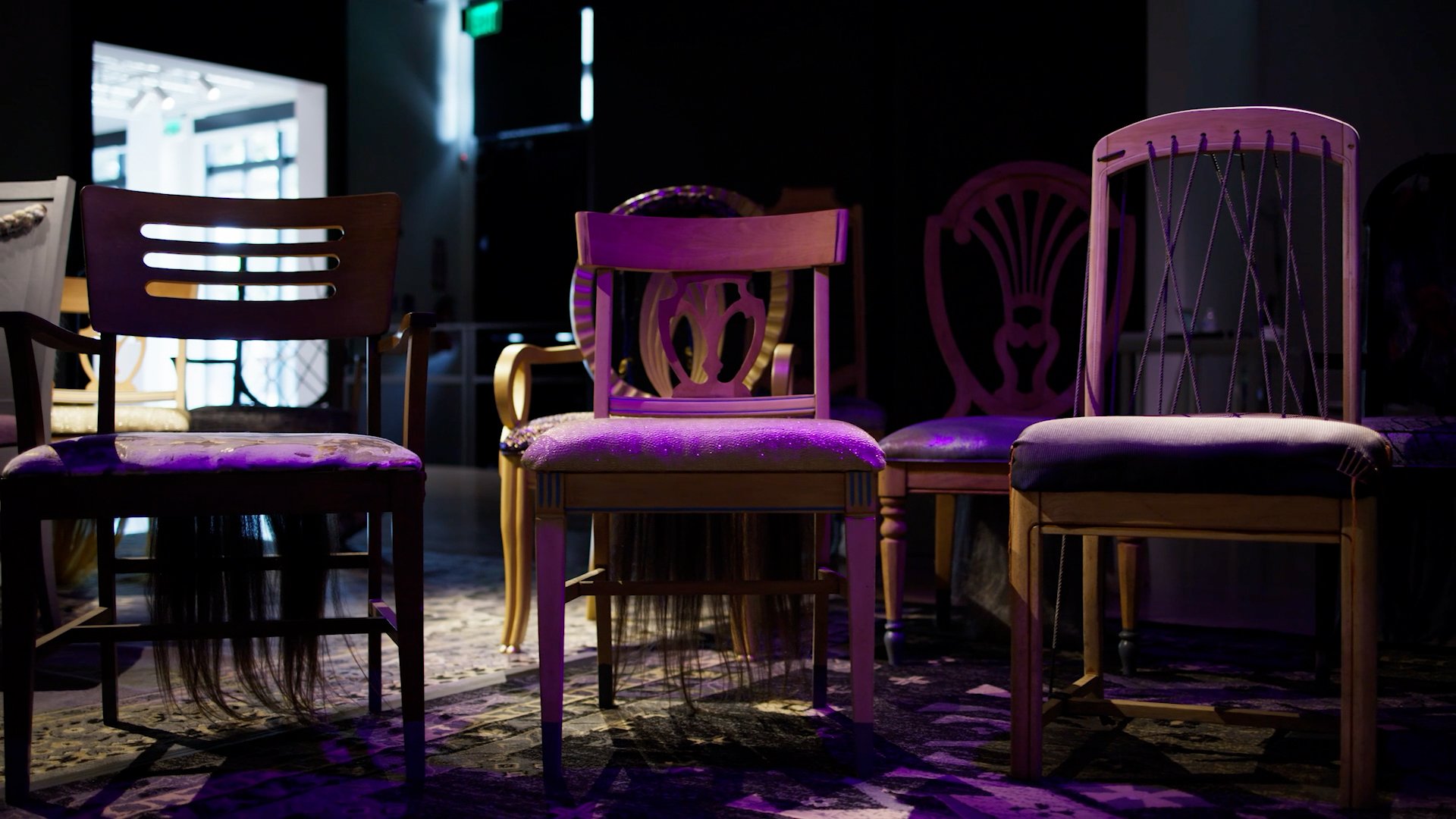
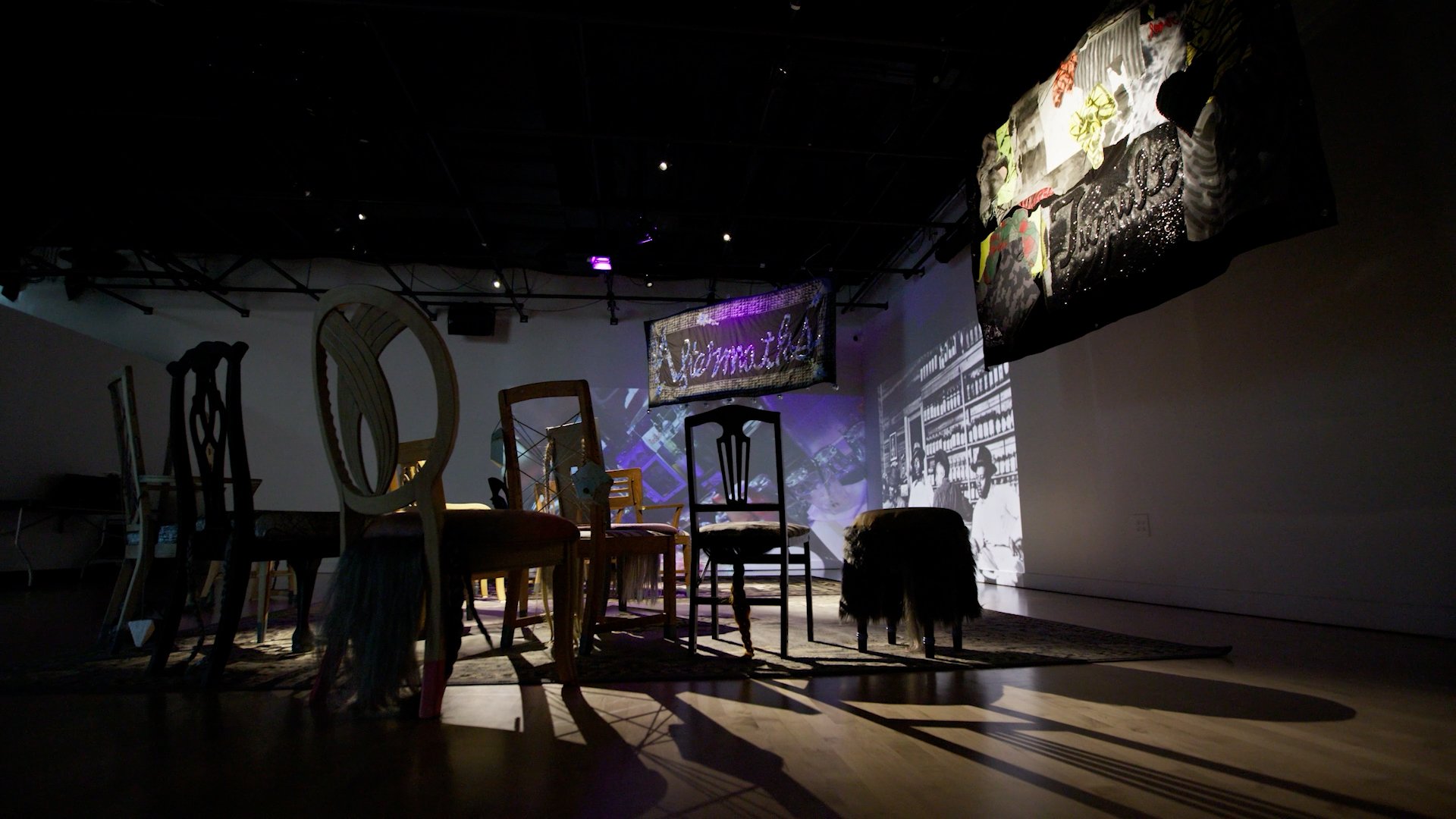
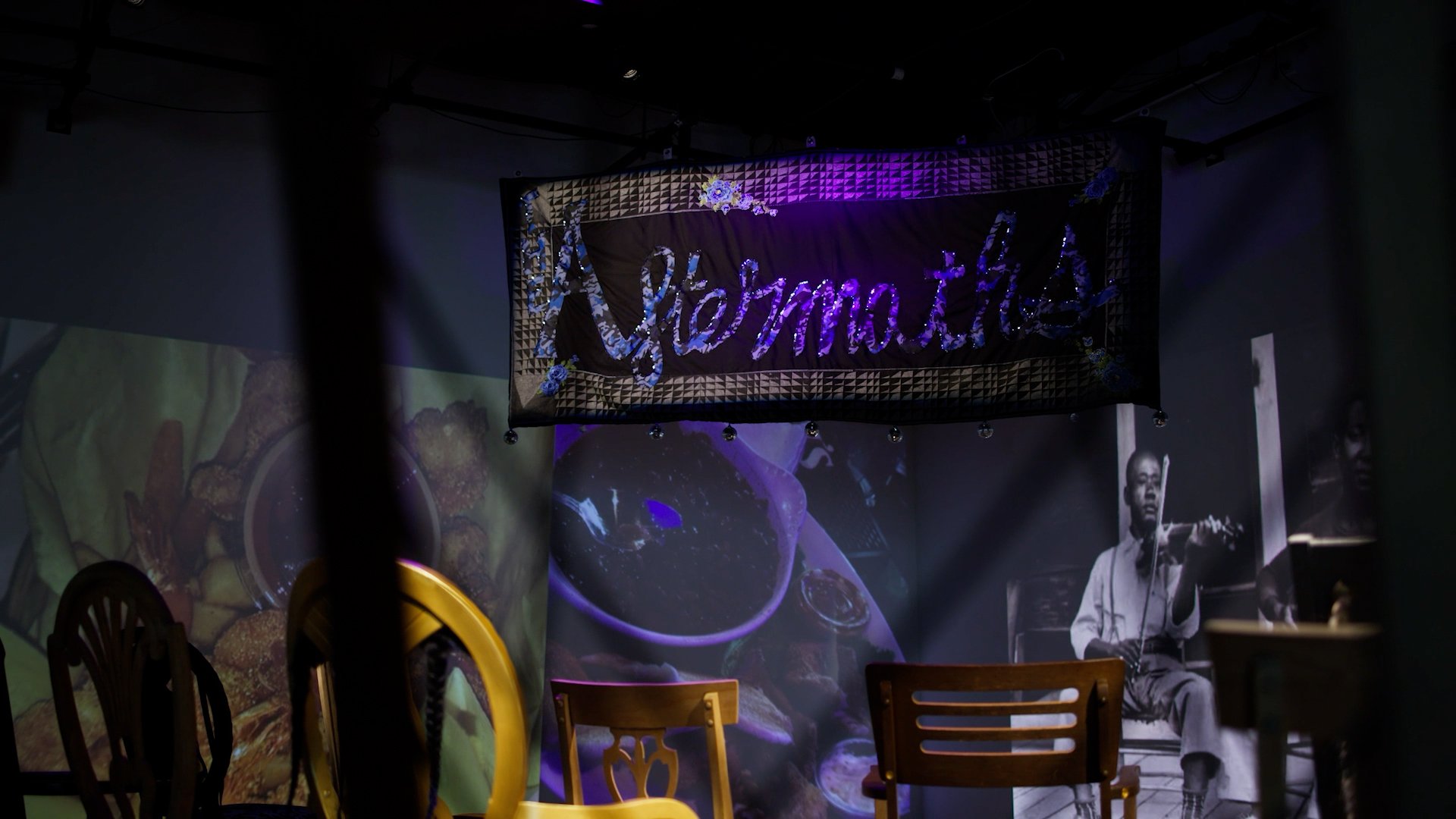
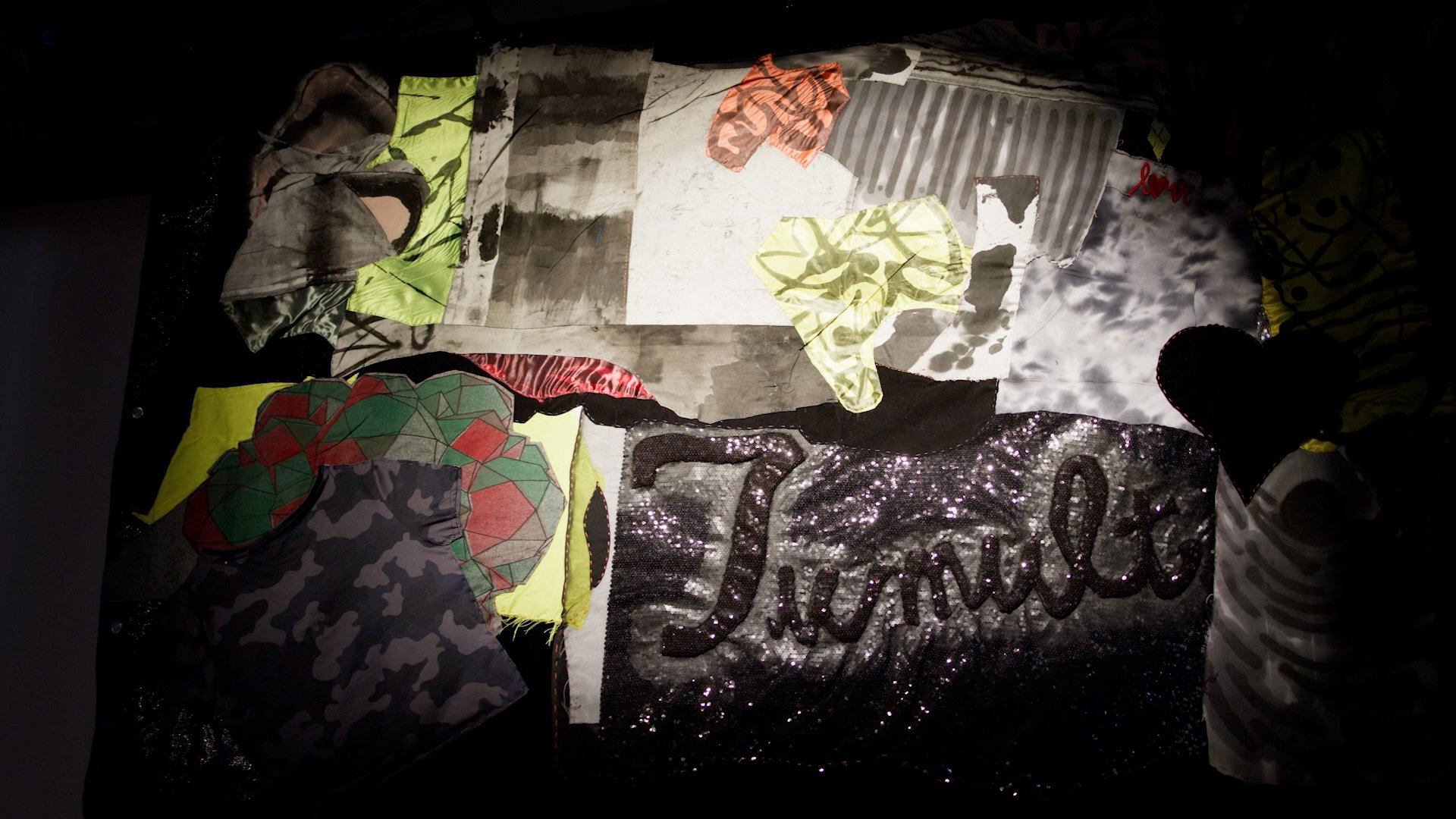
When a visitor walks into OXY during open hours they’ll first notice two hanging banners and an accumulation of adorned chairs. The chairs are a feature of Smith’s evolving work Quorum, dining chairs abandoned on medians, sidewalks and street corners, rescued and refurbished, with sculptural additions, each one holding a place for persons who have not yet arrived. OXY hosts open-hours Tuesday through Saturday for flexible, drop-in visits, with a radio show broadcasting live, implicating visitors with a series of queries related to the aftermath. The program has included a (public) film series, a (private) reading group, and a (private) music performance, and later today, Smith will convene one more. It’s not a free-for-all, but Smith has offered space to the community, such that sympathetic groups who need a space to convene can show up and use the room. Here’s the National Museum’s invitation: during daily gallery hours, anyone is welcome to use the space to develop strategies of survival, scheme, write, plan, work or otherwise respond to the prompt this speculative museum poses.
Smith is candid about how little there is to see in the gallery, and about the confusion this produces inside the institution and among visitors who follow her work. “People keep telling me, ‘I’m coming to see your show,’” she said during a conversation in mid-July, over a shared lunch in the back office of Morán Morán gallery, along with the National Museum’s co-curators Jon Rubin and Harrison Kinnane Smith. “I tell them, please don’t do that. They say, no, I want to see it.” She begs them not to. Even the near-empty room was a negotiation. When the project was being planned, “they said, ‘we should add a reading situation,’” as she’s done in the past. “I asked why, and they said, well, it’s empty. I said, yes, because there’s no show in here.” Even if it’s not quite an exhibition, it’s more than an empty room; as Smith is working through ideas, she’s installed a double projection, and two of her distinctive handmade banners, in addition to the Quorum chairs. But each has been introduced as augmentations to a set for filmmaking.
For Smith, “The National Museum is actually the facade of the building,” she continued, “it’s the conversation that occurred to figure out what the museum was going to be, and that’s it, that’s the work. It’s done. You can drive by it, you don’t have to go in.” She prefers to describe her involvement as a residency rather than the presentation of an exhibition. When Rubin asked why she had agreed to any of it, her answer was practical. “I thought I could… do some research there. Since finishing the shows last fall, I’d been wanting to re-inhabit LA as a city, find ways of bringing people together… and this presented a guise for doing that.” Like a residency, it offered “space and time to focus,” and, “it let me distill ideas about radical self-determination.” But as the ideas and plans took shape she thought, “let’s get the ETA IVtet in a room, or what does the undercommons of deep study actually look like…let’s see what a reading group does.”
The rhythm of the summer is anchored by three filming sessions, each staging a way for different people in her extended community to walk together through life in the aftermath. Artist and co-curator Harrison Kinnane Smith, who is also a former student of Smith’s (but no family relation), describes them as “subaltern groups negotiating power within themselves,” and the gallery as a stage to let those negotiations happen while the camera documents. Two film-shoots have already taken place: a jazz performance and a reading group. The third arrives tonight in the form of a Town Hall meeting.
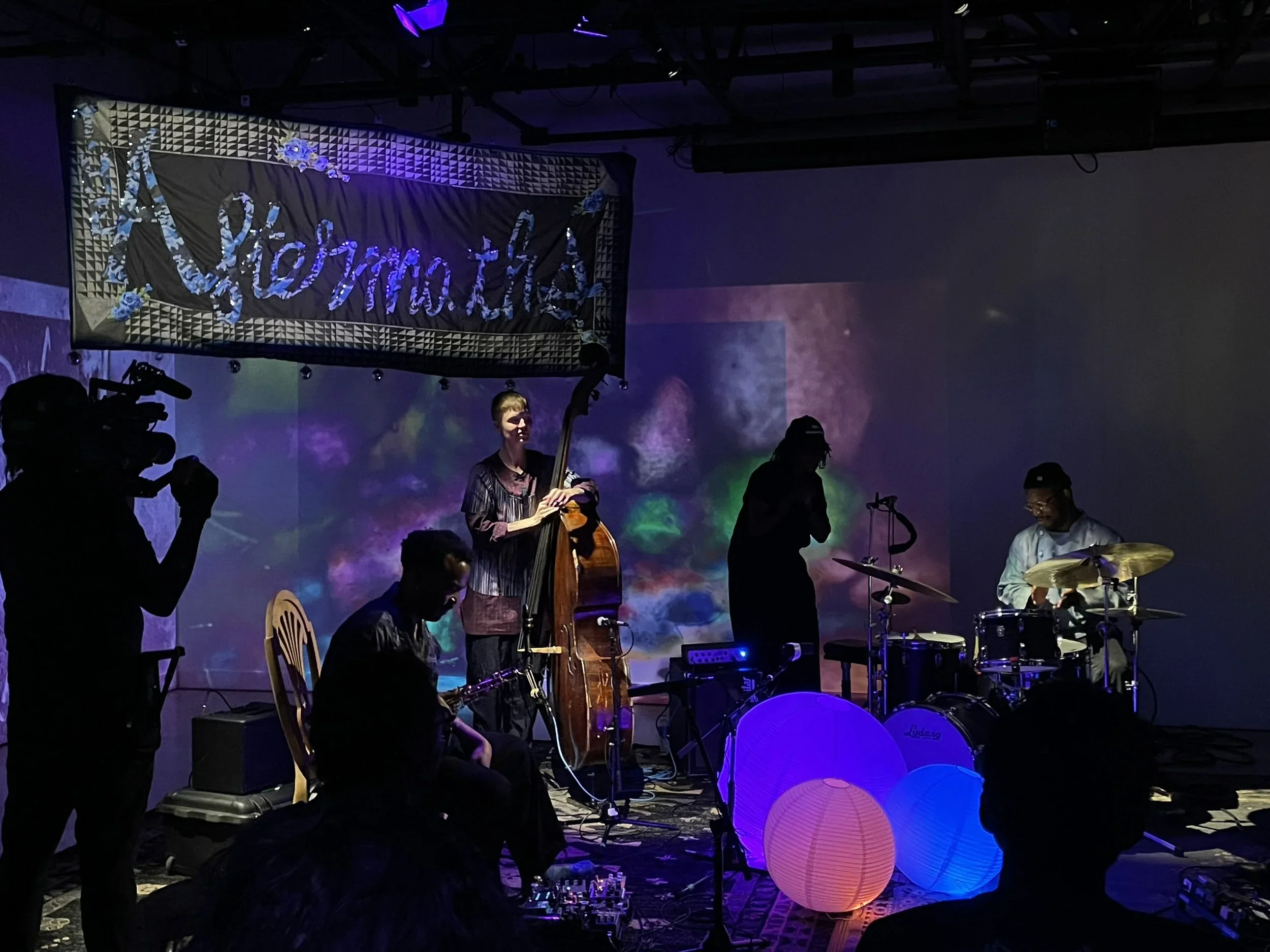
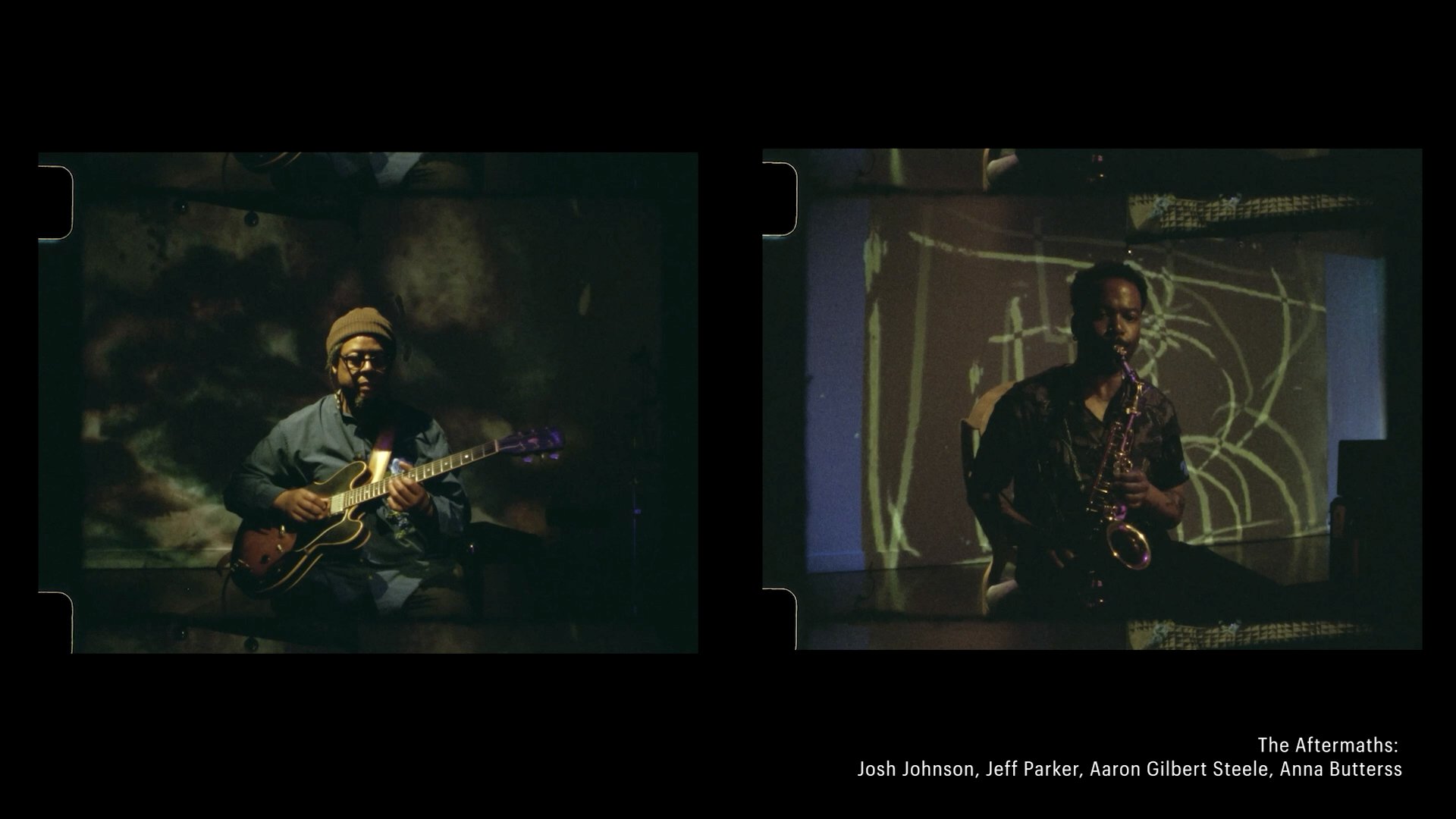
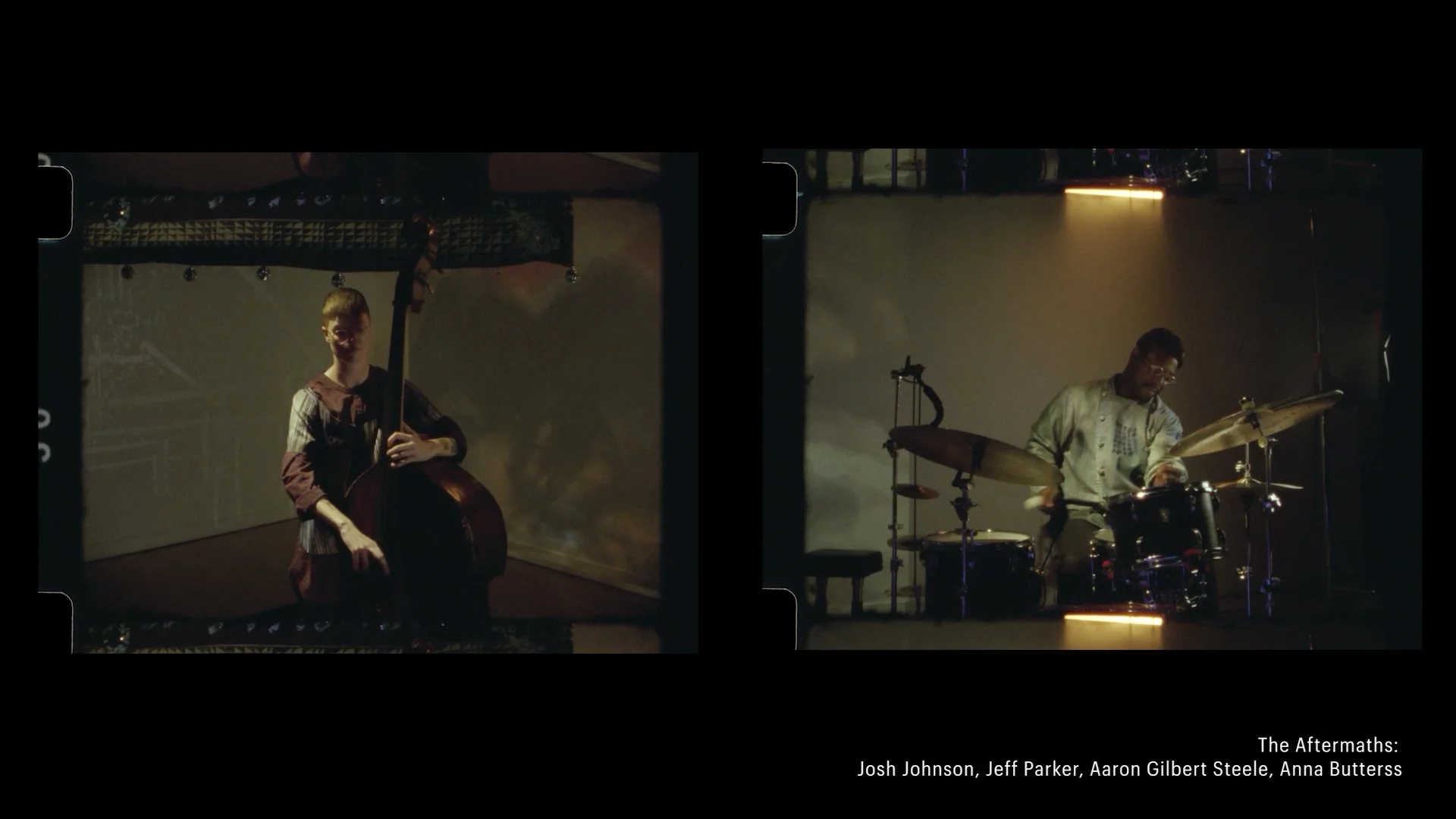
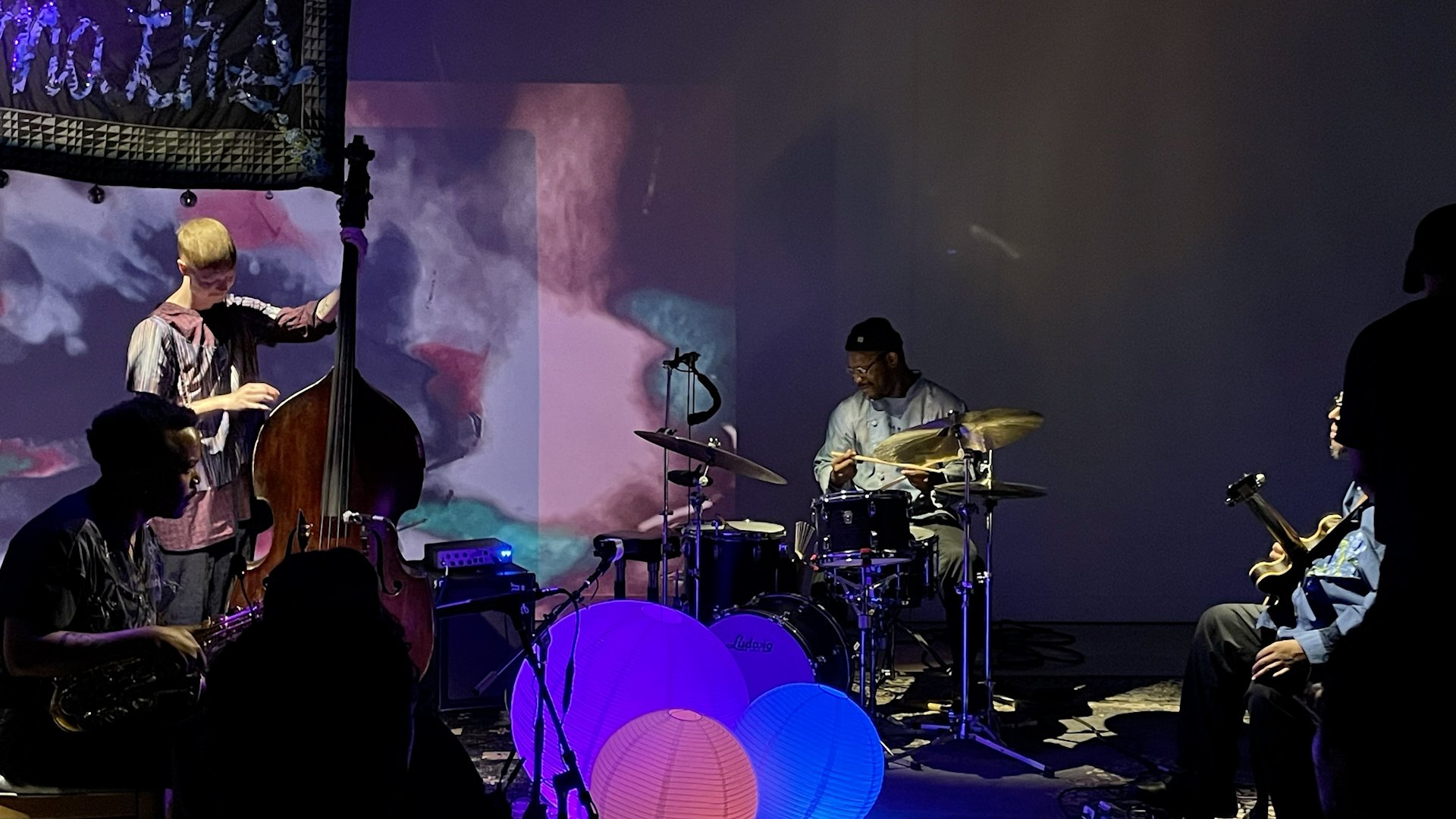
For the first, Smith assembled a quartet that became the Aftermaths: Jeff Parker, Anna Butterss, Josh Johnson, and the drummer Aaron Gilbert Steele, who improvised for a live studio audience in custom costumes. Above them hung a banner that reads “Aftermaths” in a patterned cursive. The group is a deliberate step away from the ETA IVtet, the band Parker, Butterss, and Johnson formed with drummer Jay Bellerose, whose residency at the tiny Bar ETA in Highland Park Smith had followed since moving back to Los Angeles. “Jeff created this whole scene for improvisational music in LA.” She continues, “to me they’re an amazing model of how you actually build the world you need.” Swapping one drummer made the difference between documenting a known group and conjuring a provisional one. “This is an anomaly even Jeff doesn’t quite know what to do with, a tiny chimera of a band for an afternoon.”
Beyond an affection for the music, she admires the model of exchange. “What I love about improvisation…is that at any moment anyone can seize the idea and push it in a new direction. It’s horizontal.” She continues, “all of them are bringing something that alone they don’t have. If they don’t share it, nothing happens. If they don’t respond generously, nothing happens.” Smith glows with enthusiasm about the sociality that implies, “what if we could do that with everything, in a classroom, all the time?” Smith thinks improvisation may be key, a way we can work together.
Smith drew the brightest line in our conversation at the edge of activism. “I don’t do activism or action for social change, to shift public policy, and I don’t want my art deployed in service of that, because that’s about the acquisition of power, which is important…someone’s got to do it, and I support people doing that.” To Smith, art is “not so much about the acquisition of power as about destabilizing people, giving them an experience of recognition so they can consider other possibilities for what can happen.”
The position was formed through an experience she had as a young artist. She joined the All-African People’s Revolutionary Party, the Pan-Africanist organization in Guinea, and tried to make work that answered its demands. “If you were an artist, you had to figure out how to make yourself useful, because [the AAPRP thinks] art isn’t useful to the people on its own.” Smith gave it a try, but eventually went her own way. There’s a tendency, she said, that has repeated itself across half a century of revolutions: once they get into power, “they throw the artists in jail. It’s remarkably consistent.” Instead, she thinks, “the best outcome would be if someone saw one of my performances and thought, ‘this isn’t a real protest,’ because then they know what a real protest should be doing,” and she adds, “so go do that.”
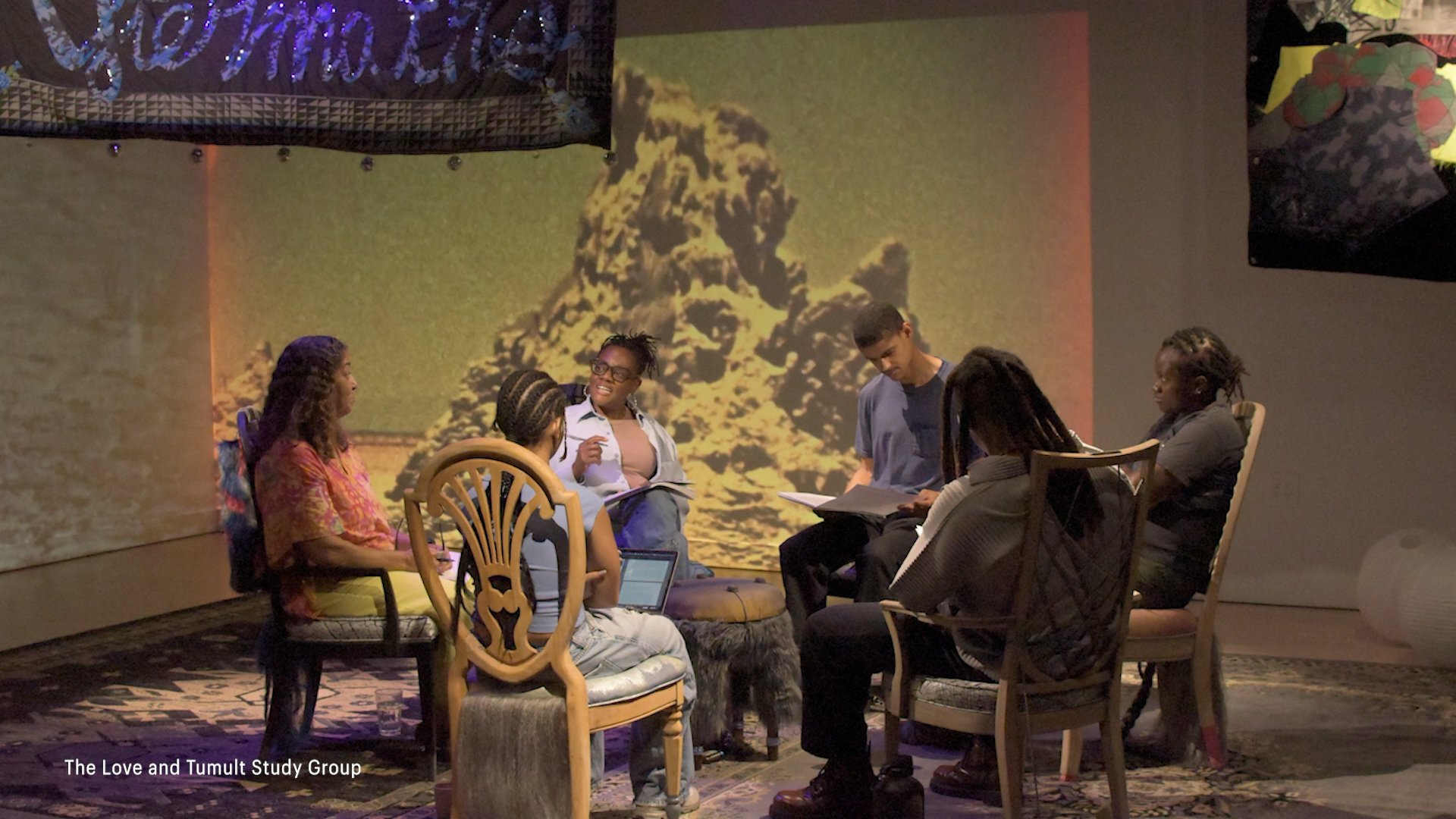
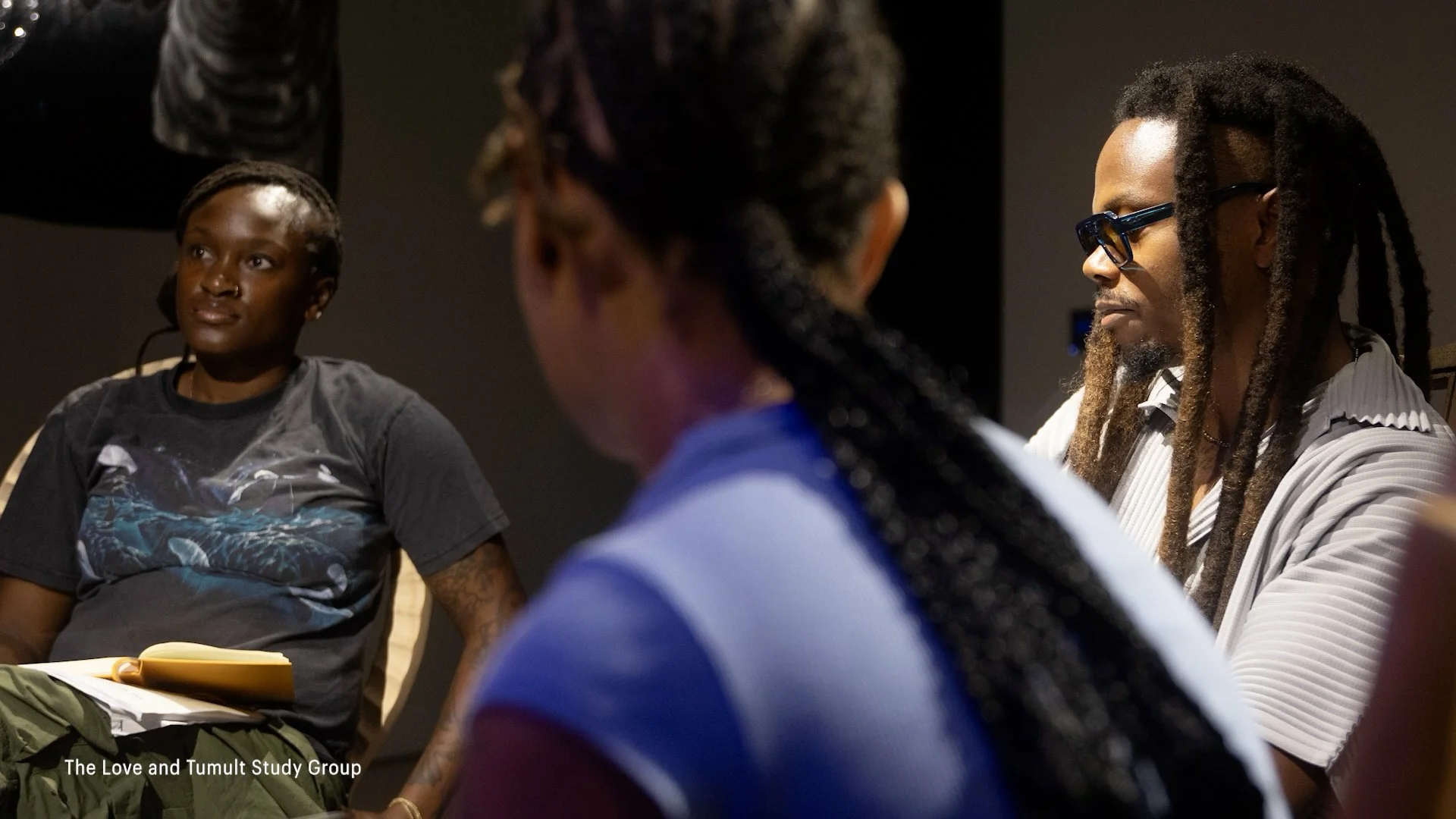
The second convening took shape as a reading group, which met in the gallery around a newly assembled Reader of excerpts and stories chosen by Smith and the expanded group of collaborators. It includes Bell, alongside Frank Wilderson, Édouard Glissant, Sylvia Wynter, Saidiya Hartman, and an excerpt of the United States Constitution. The session I attended (sitting on the sidelines) in July took up Bell’s short story, a science-fiction parable, “The Space Traders,” in which aliens offer the United States gold and clean energy in exchange for its entire Black population. Around the circle were friends and students (some former) from Smith’s UCLA course. She has spent years stripping what she calls carceral pedagogy out of her classroom, handing students real power on day one, and finds that many would rather keep the hustle they know, but some rise to the occasion. She provides each group with a reading list, and not much else. She adds, “I’ve gotten better with the class, at letting them know how much power they really have.”
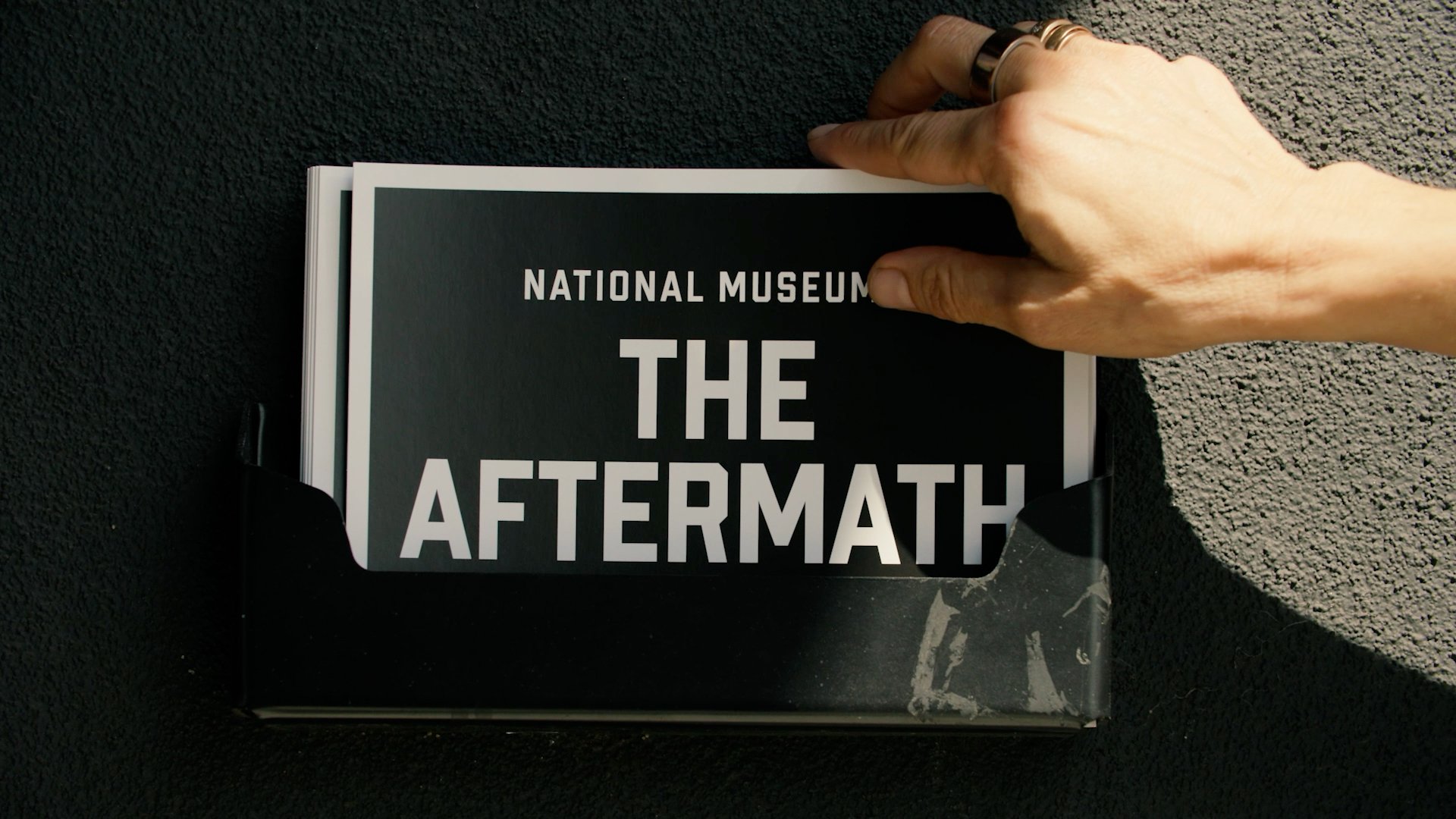
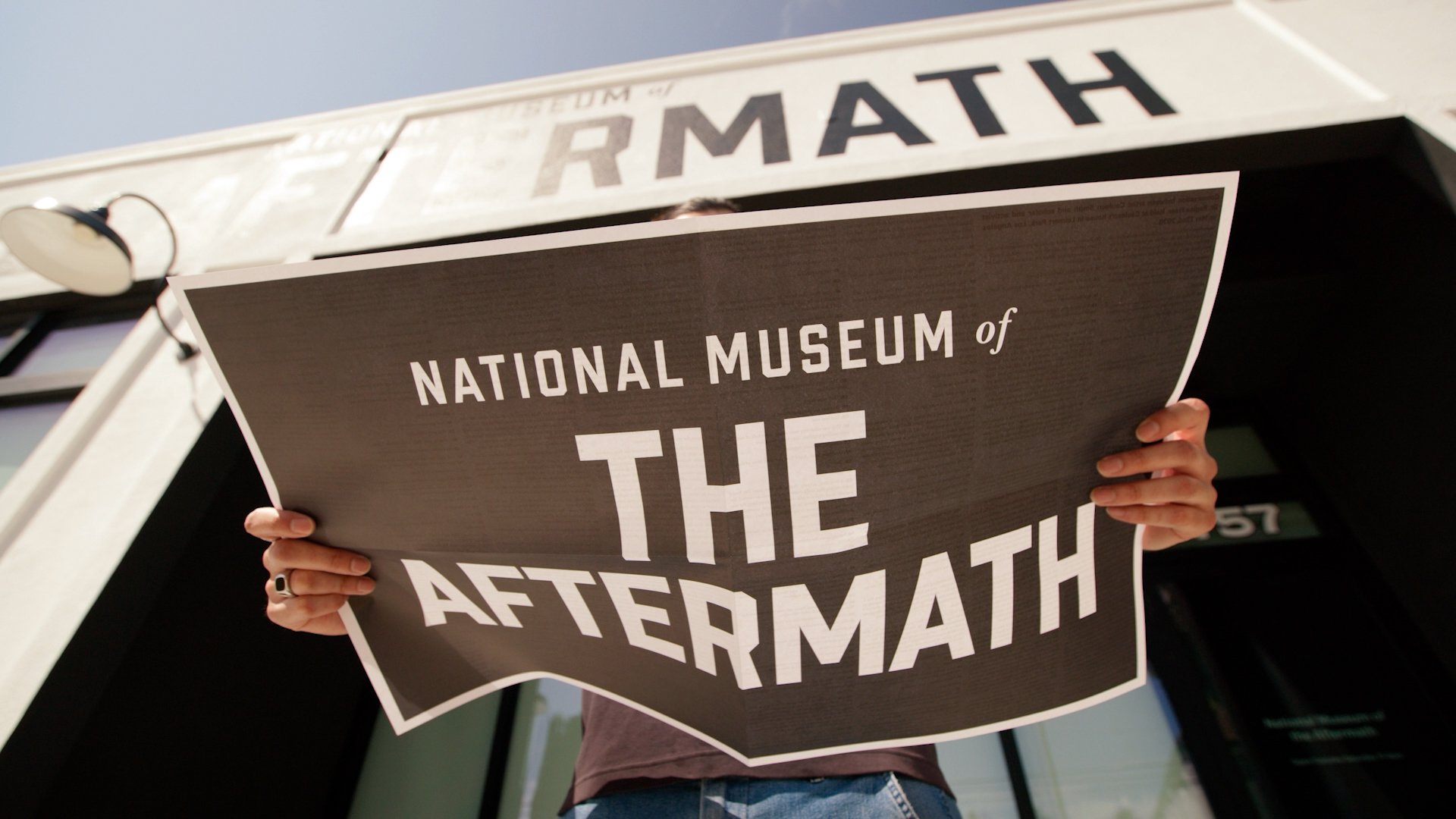
In a printed broadsheet freely distributed as part of the National Museum project, Smith holds a conversation with political scientist Regina Freer, and in that conversation she describes the role of the artist as a shamanistic agitator. In our conversation, however, she also described herself as an apprentice of the historical figures she takes up in her work, reading through their history, and thinking through their writing, their poetry, their films. Slowing things down is something Freer is aiming for and returns to repeatedly in their conversation, but slowness is not Smith’s preferred rhythm. She edits at a fast clip and expects repeat viewing rather than sustained attention. Freer also joined the filmed session of the reading group, and Smith acknowledged that a reading group has a different tempo. She notes, “having to place yourself in a situation where you have to listen immediately slows things down, stops time a little.”
The third gathering, scheduled for later today, may be the most adventurous. “On August 6th [today], is a convening of Black artists with some combination of social, cultural, or economic capital…to discuss acquiring and reopening the Cork Bar, which was founded in 1947 and closed around 2019.” The Cork was a bar in the West Adams neighborhood where many Black artists convened, but Smith had never been. “I’d pass it all the time on the way to my studio, and when I asked about it people started waxing poetic,” she continues, “I was talking to Erin Christovale and Martine Syms, and said, ‘what if we all went in on it?’” Whenever she asks, whomever she asks, the answer has always been: yes. The private gathering will be staged, “like a city council meeting, a table, everyone with a mic, and an audience of concerned citizens,” Smith said. Each panelist will present a proposal; a few people in the audience will have questions ready. “It’ll be mayhem, which is what I’m interested in with this one, a different tone from the others.”
When Rubin asked about the relationship between the staged performance of the gathering and the fact that she has a real estate agent on call in case things progress, Smith described the whole event as a rehearsal built to collapse into reality. “I think of it as play. I’m asking the artists to come and pretend we’re going to do this thing, and pretend to do it until we actually are doing it, that’s the idea. I want them driving home thinking, actually, we could do it this way, or maybe we shouldn’t do it that way.”
Imagining an institution into being until it becomes real has been the National Museum’s primary methodology from the beginning. The origin story goes back to 2019, and a project I worked on with Rubin for the CounterpublicTriennial in St. Louis. At the invitation of James McAnally, we conceived of a public installation in three phases, taking over the signage of an empty storefront on Cherokee Street: The National Museum of Monuments, then a month later Monuments was replaced by Ruins, and after another month, Ruins was replaced by Forgetting. So over three months a passerby would’ve connected a three-act sequence The National Museum of Monuments — Ruins — Forgetting. The project was accompanied by posters taped up around the neighborhood, and a series of performances that inaugurated each phase. Then COVID took over, and in the years following, while we were collectively recovering, Rubin had the idea to resume the project in Pittsburgh; I signed on as an advisor. The more recent nomadic version is a notable evolution, further establishing the para-institution as a hybrid artistic practice.
At the table in the back of Morán Morán, I suggested the word para-institutionto Smith, alongside the other term that has followed the project from its first conversations: maroonage (or marronage), the practice of escaped enslaved people building autonomous communities within and alongside the system that has oppressed them. Harrison pointed out that the word appears nowhere in the publicly presented texts, and yet “maroonage was the point of departure for a lot of this... a lot of what we’ve organized is in service of letting that provocation keep being asked.” Smith was more clear about which term fits: “I think we’re functioning more like maroonage. We come in, do stuff, take stuff, things happen, and we go. It’s a little disruptive, though we try not to be, [we try to have] a light footprint. But they have to respond and accommodate, or not.” Of OXY she said, with a smile, “they’re a host to a parasite.” She mentioned arriving for a site visit to find someone had torn down one of the exterior flags, and a staff member was already fixing it. “They didn’t even want the flags particularly, but it’s something they had to respond to.” Ultimately it’s clear that the relationship is one of committed care and support. The staff at OXY ARTS, which is itself an institution inside of Occidental College, has been steadfast in their support of Smith’s residency alongside the National Museum’s take-over despite a moment of transition imposed by the college. The result is a nested doll effect, where an art center inside of a college hosts a para-institution hosting a maroonage.
The ‘container’ or para-project of the National Museum rests on the notion that museums and nations are fundamentally the same kind of fiction: imagined political constructs used to collect, categorize, narrate, and contain. A national museum does not simply house culture; it delimits it, deciding whose narratives are told and which POV becomes the official record. These decisions encode values and ideology into the architecture, the collection, the wall text, the taxonomic systems that organize what you see and even the order in which you see it. When Dread Scott presented the National Museum of People’s Uprisings in October–December 2024, just as Trump was being reelected, the organizers had no idea how quickly the cultural tides would turn, eventually leading to the end of the project in Pittsburgh and the abrupt end to its relationship with its host organization, the Pittsburgh Cultural Trust. In the fall of 2024, a pro-Israel journal published an article accusing Dread Scott of being antisemitic, pointing to a Hyperallergic article Scott wrote a year before. One week later, the Pittsburgh Cultural Trust responded by rescinding confirmed plans to continue the project. I read their cancellation not only as a clear act of censorship, but as implicitly accepting the arrival of a new cultural climate ushered in by the Trump administration, one that was anti-DEI.
So the National Museum went on the road; it was always intended to be itinerant and temporary, and it quickly found new momentum in its nomadic form. In the Pittsburgh version, the National Museum was an invitation to an individual artist, who then changed the museum’s name by adding to it, crossing things out, reinventing its mission. Each artist then chose a writer. Previous artists and writers who have participated by transforming the museum’s identity have included Pablo Helguera, Walid Raad & Jalal Toufic, Edgar Heap of Birds & Suzan Shown Harjo, Dread Scott & Saul Williams. Each writer contributed texts to the broadside poster that was mailed out and posted publicly, developing in their own way the ideas suggested by the new title, to frame or reinvent the narrative. Each iteration introduced a different set of tensions and histories. The result is that much of what’s been missing in museums has been made visible, and a new understanding of what it could mean to hold culture in common has emerged.